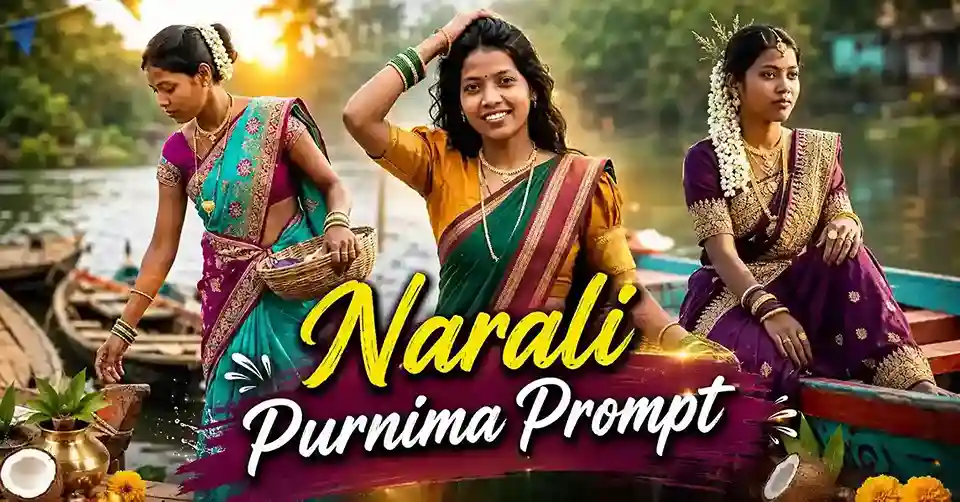
Subah ke saade chhe baje hain. Worli koliwada mein ek naav abhi bhi kinare par bandhi hui hai, aur uske paas ek ladki apni maa ki purani nauvari saree pehen kar khadi hai, nath naak mein, ek nariyal dono haaton mein. Yehi scene hai jo is saal Instagram par sabse zyada dikhega, bas fark itna hai ki ab log ye photo studio mein nahi, AI se apne hi ghar se bana rahe hain.
Narali Purnima, yaani Nariyal Purnima, Koli fishing community ka sabse zaroori din, aur is saal ye din digital camera se nahi, prompt se capture ho raha hai.
Table of Contents
ToggleNarali Purnima Aur Koli Community Ka Rishta
Narali Purnima Shravan mahine ki purnima ko manaya jaata hai. Isi din samandar ke devta Varun Dev ko coconut arpan kiya jaata hai, monsoon khatam hone ke baad safe fishing season shuru karne ki prarthana ke saath. Maharashtra ki Koli community ke liye ye sirf ek festival nahi, poore saal ki shuruat hai. Iske alawa ye tradition Goa, Gujarat aur coastal Karnataka mein bhi dikhti hai, bas naam aur rasm thodi alag ho sakti hai.
Koli saree, jise nauvari bhi kehte hain, is din ka sabse pehchana jaane wala element hai. Saath mein nath, jo naak ki barik ring hoti hai, aur chunky traditional jewellery, ye teeno milkar wahi look banate hain jo ab AI photo prompts mein sabse zyada search ho raha hai.
Log AI Photo Narali Purnima Prompt Kyun Dhoondh Rahe Hain
Har saal Narali Purnima par koliwada ke ghar-ghar mein traditional photoshoot hota hai, lekin real nauvari saree, real nath, aur samandar kinare jaana, sabke paas time nahi hota. AI photo prompt is gap ko bharta hai. Tumhe bas ek clear selfie chahiye, aur bache hue kaam Gemini, ChatGPT ya Midjourney kar dete hain; saree, jewellery, background sab AI banata hai, tumhara face wahi rehta hai.
Yehi wajah hai ki “coconut day prompt” aur “koli saree AI prompt” jaise searches is hafte tezi se badh rahe hain.
Ready-to-Use Narali Purnima AI Photo Prompts
Neeche diye gaye prompts copy-paste karke kisi bhi AI photo tool mein daal sakte ho. Apni saaf, front-facing selfie upload karna, taaki face-lock (chehra bilkul same rakhna) sahi se kaam kare.
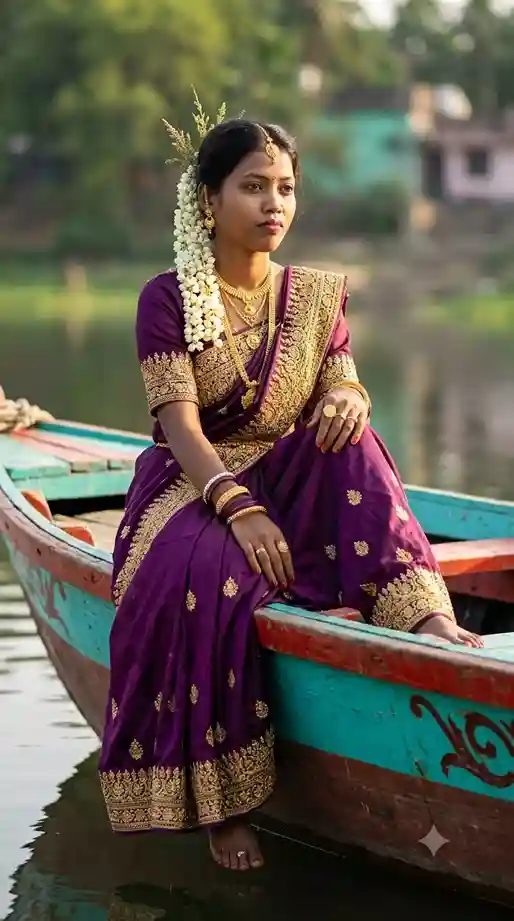
Use the uploaded photo as a reference, keep a 100% face match, and create a photorealistic, cinematic, vertical portrait of an adult woman wearing a traditional deep purple sari adorned with elaborate gold embroidery. She wears a full set of traditional gold jewelry, including multiple necklaces, earrings, bangles, rings, and an ornamental facial piece. Her hair is neatly styled and decorated with white flowers and botanical elements. The woman is seated elegantly on a traditional wooden boat painted in shades of turquoise, red, white, and brown. She maintains a relaxed yet refined pose, with her hands resting together on one knee and her feet close to the water. The scene takes place outdoors by the water, with distant vegetation and structures softly blurred in the background. Use soft, warm natural light and a shallow depth of field with a natural photographic background blur. Ensure realistic skin and fabric textures, sharp details on the sari and jewelry, a balanced composition, and a professional photographic perspective. Highlight the contrast between the purple sari, the gold jewelry, and the turquoise and red colors of the boat. High-end editorial photography aesthetic—elegant, authentic, and culturally respectful—featuring a cinematic finish, natural lighting, and a high level of detail.
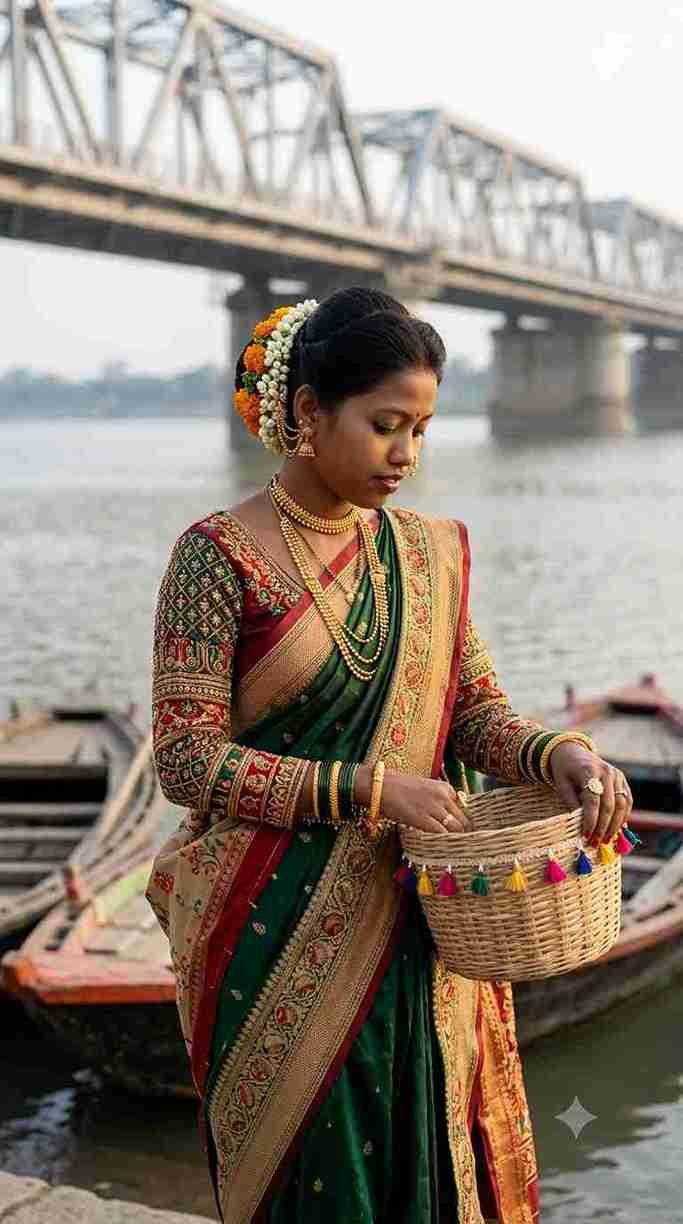
Use the uploaded photo as a reference, keep a 100% face match, and create a high-end, photorealistic vertical portrait of an adult Indian woman, elegantly dressed in a traditional sari featuring rich colors and intricate textile details. The sari should display a harmonious blend of deep green, red, gold, and beige tones, accented with meticulously crafted traditional embroidery. She wears a richly embroidered long-sleeved blouse and an array of traditional gold jewelry, including layered necklaces, earrings, bangles, rings, and facial ornaments. Her hair is styled in an elegant bun adorned with fresh flowers and botanical elements. Her makeup is traditional, sophisticated, and natural, with defined eyes and lips. Place the woman by a riverbank, surrounded by small, traditional wooden boats. She should be interacting naturally with a handcrafted object, such as a basket woven from natural fibers and decorated with small, colorful tassels. Her pose should convey elegance and ease, avoiding any overly artificial or stiff appearance. In the background, include a large, modern metal bridge spanning the river, creating a visual contrast between the subject’s attire and cultural traditions and the contemporary urban setting. Keep the water, boats, and vegetation as secondary elements. Use soft, diffused natural daylight, ensuring balanced exposure, realistic colors, and natural skin tones. Apply a shallow depth of field: the woman and her clothing should be in sharp focus, while the bridge, vegetation, and distant elements feature a soft photographic blur. The composition should resemble a professional editorial or documentary photograph taken by a specialist in cultural portraiture. Prioritize realism in the rendering of skin, fabrics, embroidery, jewelry, flowers, the basket, and the water environment. Maintain an aesthetic that is elegant, authentic, cinematic, and culturally respectful, avoiding the look of an illustration, CGI, or an overly processed image.
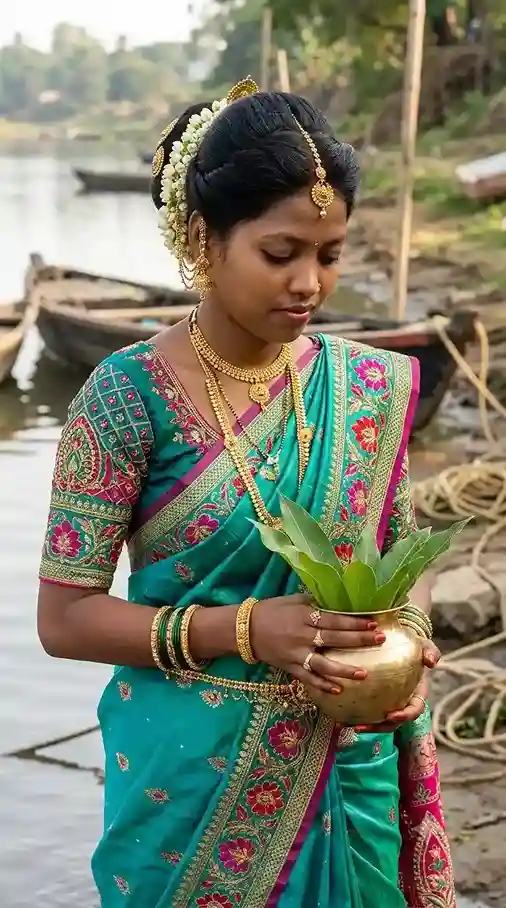
Use the uploaded photo as a reference, keep a 100% face match, and create a photorealistic, cinematic vertical portrait of an adult Indian woman, the subject of a traditional cultural portrait set by a river or body of water. The woman should wear a traditional sari in rich, elegant colors, combining shades such as turquoise, deep green, pink, fuchsia, red, beige, and gold. The sari should feature authentic-looking fabrics, traditional embroidery, ornamental motifs, and intricate textile details. The blouse should complement the sari and be equally ornate. Include an elaborate collection of traditional gold jewelry: a choker, several layered necklaces, ornate earrings, bangles, rings, chains, and other cultural accessories. The jewelry should be detailed, physically realistic, and proportionate to the subject. Her hair should be neatly styled in a traditional updo and adorned with fresh flowers, leaves, and small gold ornaments. Use elegant, sophisticated traditional makeup, featuring defined eyes, well-groomed eyebrows, natural lips, and small ornamental details on the face. The subject should be performing a natural, narrative action related to the setting. She might be holding a traditional metal vessel containing green leaves, a woven artisanal basket, or interacting with a boat. Her body language should be expressive, graceful, and spontaneous, avoiding a stiff studio pose. Set the scene on a riverbank, surrounded by small traditional wooden boats. Incorporate authentic environmental elements: water, docks, ropes, wood, vegetation, everyday objects, and distant urban architecture or bridges. The background should remain clearly contextualized yet blurred through a shallow depth of field. The subject—specifically her face, hands, sari, jewelry, and the object she is holding—must remain in sharp focus. Use soft, diffused natural outdoor light, balanced exposure, natural shadows, realistic textures (skin, hair, and fabric), physically plausible water reflections, and authentic material rendering. The composition should look as though it were captured by a professional photographer specializing in editorial portraiture and cultural documentary photography. Use a natural photographic perspective, vertical framing, clear separation between subject and background, and an elegant cinematic aesthetic. Prioritize absolute realism over stylization: natural skin texture, anatomically correct hands, physically consistent jewelry, fabrics with realistic folds, defined embroidery, realistic water, and objects correctly integrated into the scene. The final image must convey elegance, tradition, joy, cultural authenticity, and a connection to daily life by the water. Avoid an illustrative look, CGI, a digital-doll appearance, overly smoothed skin, artificial proportions, excessive HDR, or unrealistic colors.
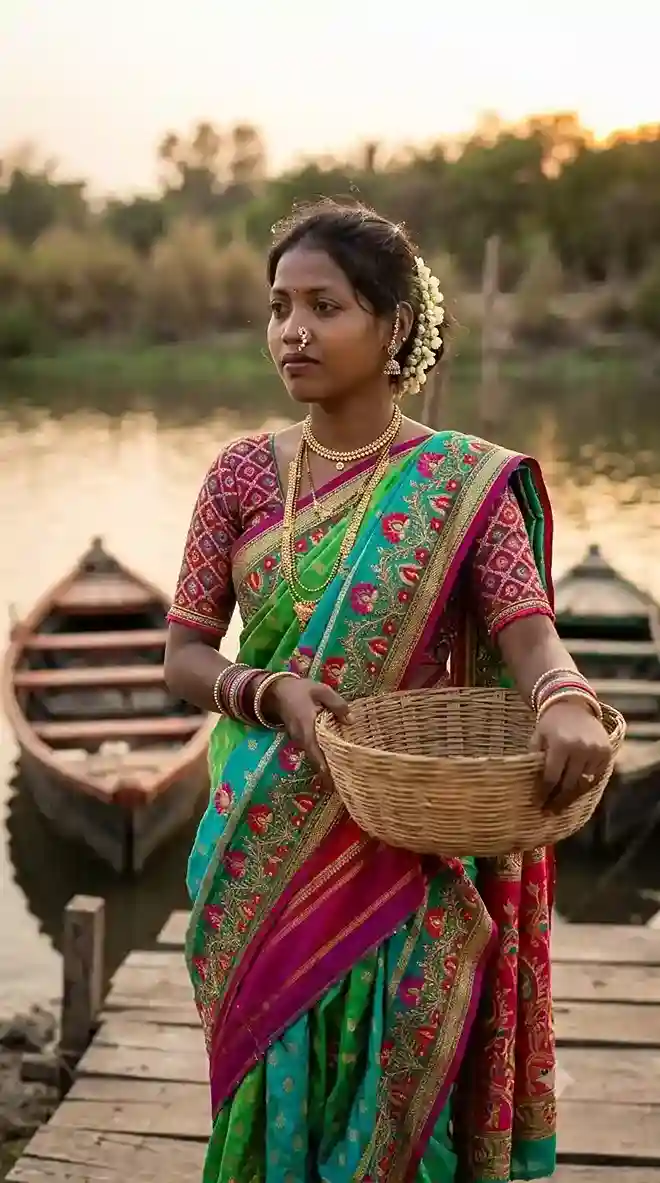
Use the uploaded photo as a reference, keep a 100% face match, and create a photorealistic, cinematic, and editorial-style vertical photograph of an adult Indian woman dressed in a traditional sari featuring vibrant, culturally authentic colors. The outfit should feature a harmonious blend of rich colors—such as green, turquoise, magenta, red, orange, pink, gold, or purple—incorporating embroidery, borders, traditional motifs, and realistic fabric textures. The blouse should complement the sari and feature traditional detailing. Include authentic Indian jewelry proportionate to the subject; the level of adornment can range from an elegant, relatively simple set to more elaborate ornamentation, including bangles, earrings, necklaces, rings, and traditional accessories. Her hair may be styled up and adorned with flowers or worn loose, depending on the scene’s activity and context. The woman should be situated in an authentic riverside setting—such as a riverbank, landing, dock, or small boat. The scene should include elements typical of daily riverside life, such as small traditional boats, water, vegetation, local structures, piers, and ropes. The subject should be engaged in a natural activity relevant to the setting. She might be walking toward the camera, sitting in a boat, holding a handcrafted basket, carrying a traditional vessel, interacting with a boat, or performing a routine cultural activity. Avoid stiff or artificial poses. Her expression should be natural and human, conveying joy, serenity, elegance, focus, or spontaneity, depending on the situation. Prioritize convincing body language and moments that appear authentically captured by a photographer. Use a vertical composition and a natural photographic perspective. Depending on the action, frame the shot as a full-body, three-quarter, or medium portrait, ensuring the subject remains the focal point. Employ a shallow depth of field with a strong photographic bokeh effect. The face, body, clothing, hands, and any objects she is holding should be in sharp focus, while the boats, people, vegetation, architecture, and background landscape should appear progressively blurred. Use soft, diffused natural outdoor lighting, vivid yet physically realistic colors, natural skin tones, soft shadows, and authentic reflections on the water. The image should resemble a professional cultural and documentary portrait photograph, captured with a high-quality camera and a fast portrait lens. Prioritize realistic textures for skin, hair, fabrics, embroidery, jewelry, wood, natural fibers, and water. The scene should convey tradition, authenticity, elegance, and a connection to daily life by the river. Avoid illustration styles, CGI, a plastic look, overly retouched skin, exaggerated HDR, incorrect anatomy, deformed hands, floating objects, or artificially generated backgrounds.
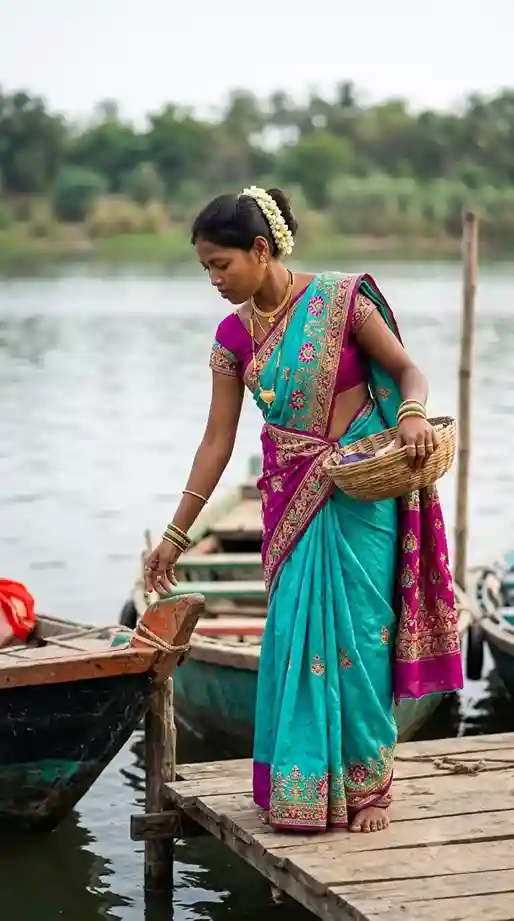
Use the uploaded photo as a reference, keep a 100% face match, and create a photorealistic, cinematic vertical photograph of an adult Indian woman dressed in a vibrant traditional sari, naturally integrated into an everyday riverside scene. The sari should feature rich, contrasting colors—such as green, turquoise, magenta, red, orange, pink, purple, or gold—with authentic fabrics, traditional embroidery, ornamental borders, and physically realistic draping. The blouse should complement the sari and may incorporate traditional sleeves and intricate textile details. Include realistic, well-proportioned traditional Indian jewelry, such as bangles, earrings, necklaces, rings, and small cultural ornaments. The amount of jewelry should suit the context, ranging from a simple set to more elaborate ceremonial adornment. Her hair may be styled up with flowers and traditional ornaments or worn loose and wavy. Makeup should be elegant and natural, featuring defined eyes, well-groomed lips, and subtle traditional decorative elements. The subject must be physically integrated into the environment and engaged in a natural action. She might be walking along a jetty, sitting in a boat, holding a boat pole, leaning against the woodwork, carrying a handcrafted basket, holding a traditional vessel, or interacting with other elements of daily riverside life. Avoid overly stiff modeling poses. Her posture, hands, arms, and facial expression should respond naturally to the action being performed. Interactions with objects and the boat must respect gravity, weight, and perspective. Set the scene in an authentic river environment featuring water, small wooden boats, riverside vegetation, jetties, and local structures. Where appropriate, incorporate bridges, buildings, or distant figures as secondary elements. Use the boat itself—its poles, roof, edges, or structural elements—as compositional tools to create a natural frame around the subject when the scene takes place inside the boat. Use soft, diffused natural outdoor light. If the subject is inside a boat, allow light to enter naturally through openings, casting soft illumination on her face and clothing. Use a shallow depth of field and natural photographic bokeh. The face, hands, sari, jewelry, and objects she interacts with should be rendered with maximum sharpness, while the water, boats, vegetation, people, and distant architecture should progressively blur. The composition may range from a close-up portrait to a half-body, three-quarter, or full-body shot depending on the action, while always keeping the subject as the visual focal point. The image should look like a professional documentary or editorial photograph captured spontaneously in a real-world setting, not a studio shoot. Prioritize natural textures for skin, hair, and fabrics; correct anatomy; realistic hands; physically consistent materials; authentic water reflections; and convincing photographic perspective. Convey a blend of tradition, joy, elegance, authenticity, and a connection to daily life by the river. Avoid any appearance of CGI, illustration, plastic-looking skin, excessive retouching, exaggerated HDR, artificial poses, deformed hands, floating objects, incorrect anatomy, or backgrounds that look artificially generated.
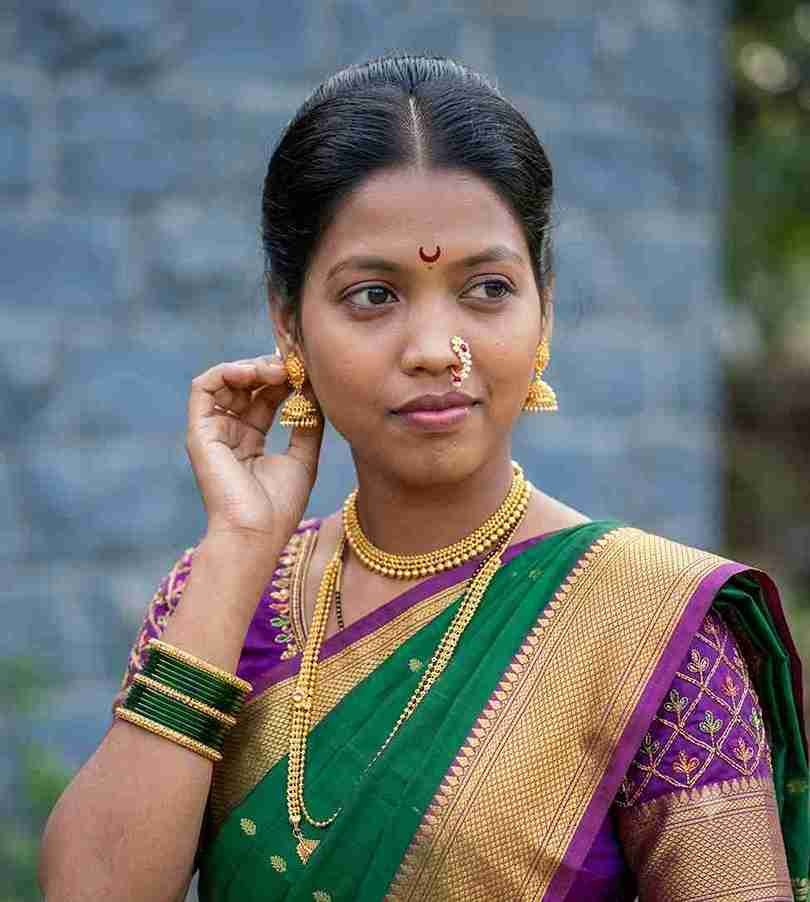
Create a highly realistic, elegant traditional Indian portrait using the uploaded photo as the primary face and identity reference. Preserve the person’s facial identity, face shape, natural skin tone, eyes, nose, lips, eyebrows, and overall recognizable appearance from the reference photo. Do not change the person’s identity or make the face look like a different person. Transform the person into a graceful Maharashtrian woman wearing a traditional green and golden silk saree, with a rich purple blouse featuring intricate traditional gold embroidery and decorative patterns. The saree should have a vibrant green body with a luxurious golden-orange zari border and realistic silk texture. Style the hair in a neatly tied traditional bun, with a clean middle partition. Add a small, elegant red crescent-shaped bindi on the forehead. Adorn her with elaborate traditional Maharashtrian gold jewelry: a beautiful traditional nath (Maharashtrian nose ring), large gold jhumka earrings, layered antique-gold necklaces, a traditional choker, a long haar, an ornate pendant, and detailed gold jewelry around the neckline. Add multiple green glass bangles mixed with thin golden bangles on her wrists. Pose the person in a graceful feminine manner, with one hand gently raised near the earring as if adjusting or touching it. Her head should be slightly turned and she should be looking softly toward the side, creating a natural, confident and elegant expression. Keep the pose relaxed and authentic rather than overly posed. Use a close-up to medium-close-up portrait composition, with the person occupying most of the frame. Capture detailed facial features, realistic skin texture, individual hair strands, fine saree fabric, embroidery, jewelry craftsmanship, and natural folds in the clothing. Set the scene outdoors with a soft blue-grey blurred background, subtle atmospheric depth, and a clean uncluttered environment. Use soft natural daylight, gentle highlights on the face and jewelry, realistic shadows, shallow depth of field, and professional portrait photography aesthetics. The final image should look like a real high-end professional photograph, not an illustration or AI artwork. Maintain realistic Indian facial features, authentic Maharashtrian styling, natural proportions, photorealistic skin texture, detailed eyes, realistic hands and fingers, accurate jewelry, realistic fabric texture, cinematic depth of field, and premium DSLR photography quality. Important: The uploaded reference photo is the identity source. Keep the person’s face and identity highly consistent with the uploaded image while changing the clothing, styling, pose, jewelry, and environment as described above. Negative Prompt: cartoon, anime, illustration, painting, artificial face, different person, altered identity, excessive makeup, plastic skin, over-smoothed skin, distorted face, asymmetrical eyes, deformed hands, extra fingers, missing fingers, duplicate jewelry, malformed nose ring, unrealistic jewelry, bad anatomy, blurry face, low resolution, oversaturated colors, unnatural skin tone, fake-looking fabric, CGI appearance, 3D render, watermark, text, logo.
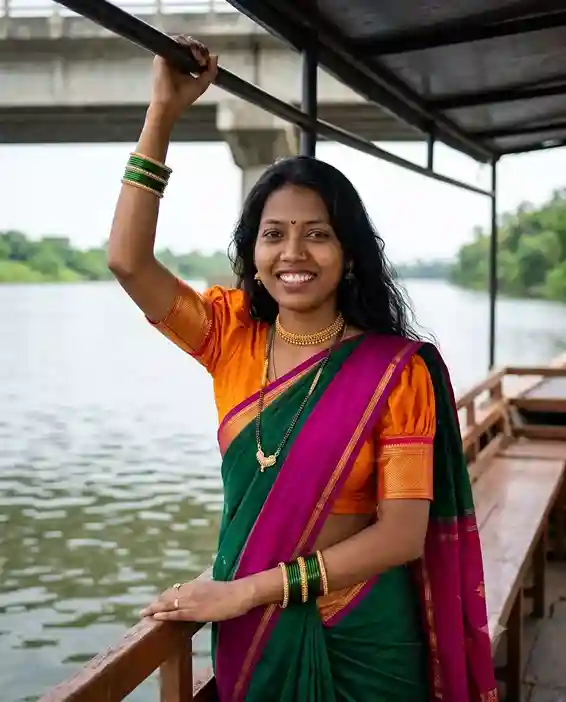
Create a highly realistic, photorealistic portrait of the person in the uploaded reference photo. Use the uploaded photo as the primary identity and facial reference. Preserve the person’s recognizable facial identity, natural face shape, facial proportions, eyes, eyebrows, nose, lips, jawline, skin tone, and overall appearance. The person must remain clearly recognizable as the same individual from the reference photo. Transform the person into a beautiful Indian woman wearing a traditional vibrant orange saree blouse/choli with puffed short sleeves, featuring subtle golden decorative borders and a fitted traditional design. Pair it with a rich dark green saree with a vibrant magenta/pink pallu, finished with elegant golden borders. The saree should have realistic Indian textile texture, natural folds, pleats and draping. Style the hair in long, naturally wavy open black hair, with soft curls and a slightly voluminous appearance. Add a small traditional black bindi on the forehead. Add elegant traditional Indian jewelry, including a delicate gold choker necklace, a long thin gold necklace/mangalsutra-style chain, small traditional gold earrings, and multiple green glass bangles mixed with golden bangles on both wrists. Add a traditional gold ring on one finger. Keep the jewelry realistic, detailed and naturally proportioned. Pose & Expression The person is standing inside a small traditional passenger boat, photographed from a slightly lower eye-level perspective. Pose her naturally with: One arm raised upward, with her hand gently gripping a dark metal horizontal support railing above her head. Her raised arm should be naturally extended upward with realistic anatomy. Her other hand should rest gracefully on the side/wooden railing of the boat. Her body should be slightly turned while her face looks directly toward the camera. Give her a bright, genuine, natural smile, showing her teeth. Her expression should feel joyful, confident, warm and candid. Keep the pose feminine and natural, avoiding an overly posed fashion-shoot appearance. Environment Place her inside a small wooden river boat underneath a bridge. A large concrete/metal bridge structure should be visible across the upper portion of the image, with a dark horizontal metal railing/support passing above her raised hand. Behind her, show a wide calm river, with lush green trees and vegetation on the distant riverbank. The distant landscape should be softly blurred with natural atmospheric depth. The composition should clearly communicate that she is traveling on a boat on a river beneath a bridge. Photography & Lighting Use soft natural outdoor daylight with slightly diffused lighting. Create realistic highlights on the face, hair, jewelry and fabric. Use a shallow-to-moderate depth of field so the woman remains sharply detailed while the river and distant trees have a soft natural blur. Use professional DSLR portrait photography aesthetics, realistic skin pores and texture, individual hair strands, detailed eyes, realistic hands and fingers, authentic Indian clothing texture, accurate jewelry reflections, natural shadows and realistic environmental perspective. Composition: vertical portrait, approximately 4:5 aspect ratio, medium-to-full body framing, subject centered slightly toward the lower-middle of the frame, with enough space above her to clearly show the bridge and raised hand. The final result must look like a real candid photograph taken on a river boat, not an AI-generated image, illustration or digital painting. Identity Preservation The uploaded reference photo is the primary source for the person’s identity. Preserve the face and recognizable characteristics from the uploaded photo as accurately as possible. Change only the clothing, hairstyle, pose, jewelry, environment and styling described above. Negative Prompt Different person, changed identity, face replacement, unrealistic face, excessive beauty filter, plastic skin, over-smoothed skin, cartoon, anime, illustration, painting, CGI, 3D render, artificial appearance, distorted facial features, asymmetrical eyes, deformed hands, extra fingers, missing fingers, broken arms, unnatural hand position, bad anatomy, malformed jewelry, duplicate fingers, duplicate jewelry, unrealistic saree folds, floating objects, distorted bridge, unrealistic river, oversaturated colors, excessive makeup, blurry face, low resolution, watermark, logo, text.
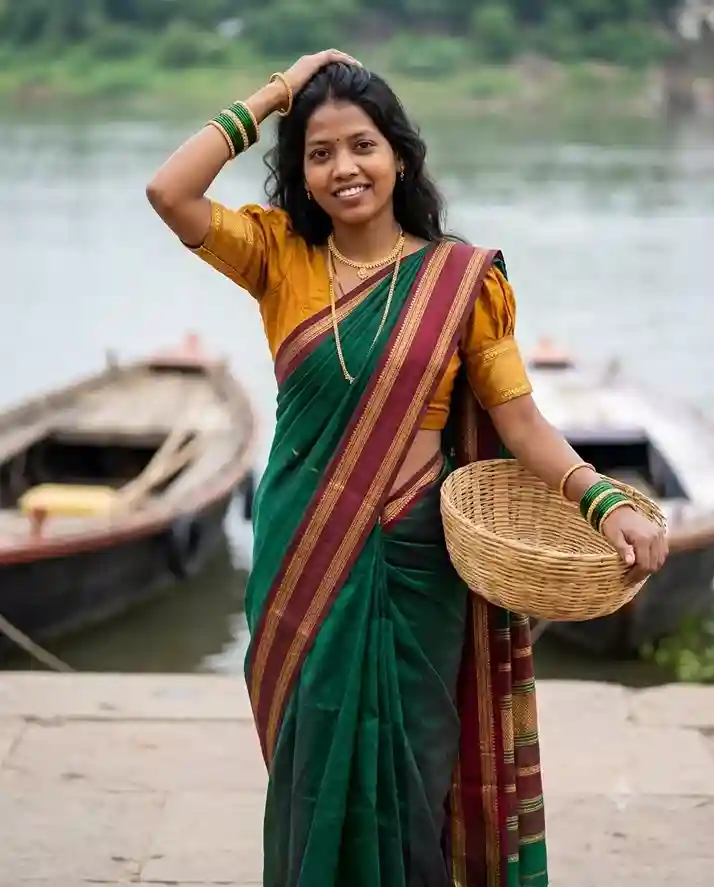
Create a highly realistic, photorealistic full-body portrait of the person in the uploaded reference photo. Use the uploaded photo as the primary identity and facial reference. Preserve the person’s recognizable facial identity, natural face shape, facial proportions, eyes, eyebrows, nose, lips, jawline, skin tone, and distinctive facial characteristics. The final person must look like the same individual from the uploaded reference photo. Transform the person into a graceful Indian woman wearing a traditional bright mustard-yellow/orange short-sleeved blouse with a beautiful feminine design, subtle gathers/puff sleeves, delicate golden trim, and realistic cotton/silk fabric texture. Pair the blouse with a traditional deep emerald-green and rich maroon/red saree. The saree should have a wide maroon pallu with multiple elegant horizontal golden zari stripes, while the main saree fabric is deep green. The saree should be naturally draped around the body with realistic pleats, folds and flowing fabric. Style the hair in long, naturally wavy black hair, partially open, with soft curls falling naturally over one shoulder. Add a small, elegant black bindi on the forehead. Add minimal but beautiful traditional Indian jewelry: a delicate gold necklace, a thin long gold chain, small traditional gold earrings, and several green glass bangles mixed with golden bangles on both wrists. Add a simple traditional gold ring. Pose Show the person in a full-body walking pose at a riverside/boat ghat. She is walking naturally toward the camera with a graceful, confident posture. Her pose should include: One arm raised above her head, with her hand gently resting on or touching the top of her hair. Her raised wrist decorated with green and gold bangles. Her other arm naturally lowered beside her body. In her lowered hand, she is carrying a round traditional woven bamboo basket/basket-like container. Her body is slightly angled for a natural candid pose. One foot is positioned slightly ahead of the other, creating a natural walking motion. Her head is slightly tilted. She is looking directly toward the camera. Give her a warm, joyful and natural smile. The pose should look candid and effortless, like a real photograph captured while she is walking near the river. Background & Environment Set the scene at a busy Indian riverside ghat/boat landing. Behind the woman, show a wide calm river with several traditional wooden passenger boats, colorful boat roofs/canopies, people near the boats, and a lush green tree-lined riverbank in the distance. Include subtle riverside activity in the background, but keep it strongly out of focus so the woman remains the main subject. The ground should be a natural riverside concrete/stone ghat surface. The atmosphere should feel authentic, lively and culturally Indian without becoming cluttered. Photography Use soft natural outdoor daylight with slightly diffused/overcast lighting. Create realistic skin tones, soft highlights and natural shadows. Use a professional DSLR portrait photography look, shallow depth of field, realistic background bokeh, natural atmospheric perspective, detailed fabric texture, realistic jewelry reflections, individual hair strands, realistic hands and fingers, and authentic Indian clothing. Composition: vertical 4:5 portrait, full-body framing from head to feet, subject positioned near the center of the frame, enough space around the body to show the riverside environment and boats. The final image should look like a real high-quality candid photograph, not an illustration, painting, CGI render or AI artwork. Identity Preservation The uploaded reference photo must be used as the primary source for the person’s identity. Keep the person’s face highly consistent with the reference image. Do not create a different face or generic model. Change only the outfit, hairstyle, pose, accessories and environment according to the prompt. Negative Prompt different person, changed identity, face replacement, generic face, unrealistic facial features, plastic skin, excessive beauty filter, over-smoothed skin, cartoon, anime, illustration, painting, CGI, 3D render, artificial appearance, distorted face, asymmetrical eyes, deformed hands, extra fingers, missing fingers, broken arms, unnatural pose, bad anatomy, distorted basket, floating objects, duplicate jewelry, malformed jewelry, unrealistic saree folds, messy background, excessive blur on subject, oversaturated colors, excessive makeup, unnatural skin tone, low resolution, blurry face, watermark, logo, text.
Har prompt mein ek cheez common hai: apna face-lock instruction pehle likho; tabhi AI tumhari asli pehchaan ke saath naya look banayega, kisi aur jaisa nahi.
Related Prompt
- AI Headshot Prompts
- Trending AI photo Editing Prompt
- Gemini AI Photo Editing Prompt
- ChatGPT Photo Editing Prompts
- AI Selfie Prompt
Kaunsa AI Tool Best Rahega
| Tool | Best Kis Cheez Ke Liye | Limitation |
|---|---|---|
| Gemini | Realistic saree texture aur natural lighting | Kabhi-kabhi face-lock ke liye do-teen try lagte hain |
| ChatGPT (Image) | Detailed jewellery aur nath ka accurate render | Background kabhi generic aa sakta hai |
| Midjourney | Artistic, poster-jaisa dramatic look | Face-match ke liye extra reference image dena padta hai |
Agar tumhe simple, jaldi ready photo chahiye, Gemini se shuru karo. Agar tum ek dramatic, wallpaper-jaisa result chahte ho, Midjourney better rahega; bas reference image zaroor dena.
Sahi Result Ke Liye 3 Cheezein Yaad Rakho
- Ek clear, front-facing photo do: dhundhla ya side-angle selfie se face-lock kamzor hota hai.
- Saree ke colors specify karo: “laal-white border” jaisa detail dene se result zyada authentic aata hai, generic “traditional dress” likhne se nahi.
- Background ko festival se juda rakho: samandar, naav, ya koliwada gali, taaki photo sirf saree-change na lage, poora scene Narali Purnima jaisa lage.
Conclusion
Narali Purnima ka asli matlab hai samandar ka shukriya ada karna, chahe tum Koliwada mein ho ya kisi aur shehar mein apne phone se ek prompt likh rahe ho. Upar diye gaye prompts mein se koi ek try karo, apna face-lock instruction daalna mat bhoolna, aur photo post karne ke liye ready hai.
